You kick off your shoes in the hallway and everyone knows it within three seconds. Annoying, but you're certainly not the only one: smelly shoes are one of the most common complaints about footwear, and it says nothing about your hygiene.
The short version: shoes start to smell because bacteria in the insole and lining feed on sweat and skin flakes. You tackle it from the inside out. First, let the shoe dry completely, then neutralize the odor inside with an odor spray, and clean the outside separately if it's also dirty or musty. Below, you'll find what works for each shoe type, why your shoes sometimes smell like cat pee, and which home remedies you'd better skip.
Why do shoes actually start to smell?
Your feet can easily produce a few deciliters of sweat per day. That sweat itself is virtually odorless. The smell only arises when bacteria on your skin break down the sweat and detached skin flakes. They secrete volatile acids in the process, and that's precisely what you smell.
A shoe is an ideal place for these bacteria: warm, dark, and moist. Three factors make it worse:
- A shoe that doesn't dry completely. An insole needs about 24 hours to really dry. If you wear the same pair every day, you start each day with a damp shoe.
- Absorbent linings. Textile, mesh, wool, and suede absorb moisture and retain it. So the smell is in the material, not just in the air.
- No socks. Without socks, all the sweat goes directly into the footbed.
This also explains why airing alone is rarely enough. You do get the shoe dry, but the bacteria in the lining remain and start over on the next day you wear them.
Why do my shoes smell like cat pee?
This is one of the most frequently asked questions, and no, a cat hasn't peed in your shoes. That sharp, ammonia-like odor occurs when bacteria break down proteins from sweat, forming ammonia. The same substance is found in cat urine, hence the association.
It often occurs with soccer boots, sports shoes, and shoes with synthetic interiors, and it stands out because the smell is much sharper than regular sweat odor. The approach is the same as for regular sweat odor, but more urgent: the longer you wait, the more stubborn it becomes.
Get rid of sweat odor from your shoes in 4 steps
The most important thing to understand: the odor is inside, and you can't get to that with a brush and foam. The inside of a closed shoe simply cannot be scrubbed. So the inside and outside require different approaches.
- First, let the shoe dry completely. Remove the insole and set it aside, as it absorbs most of the sweat. Place the shoes in an airy spot at room temperature, not on the heater or in direct sunlight, as direct heat can deform glue and materials. Allow at least 24 hours.
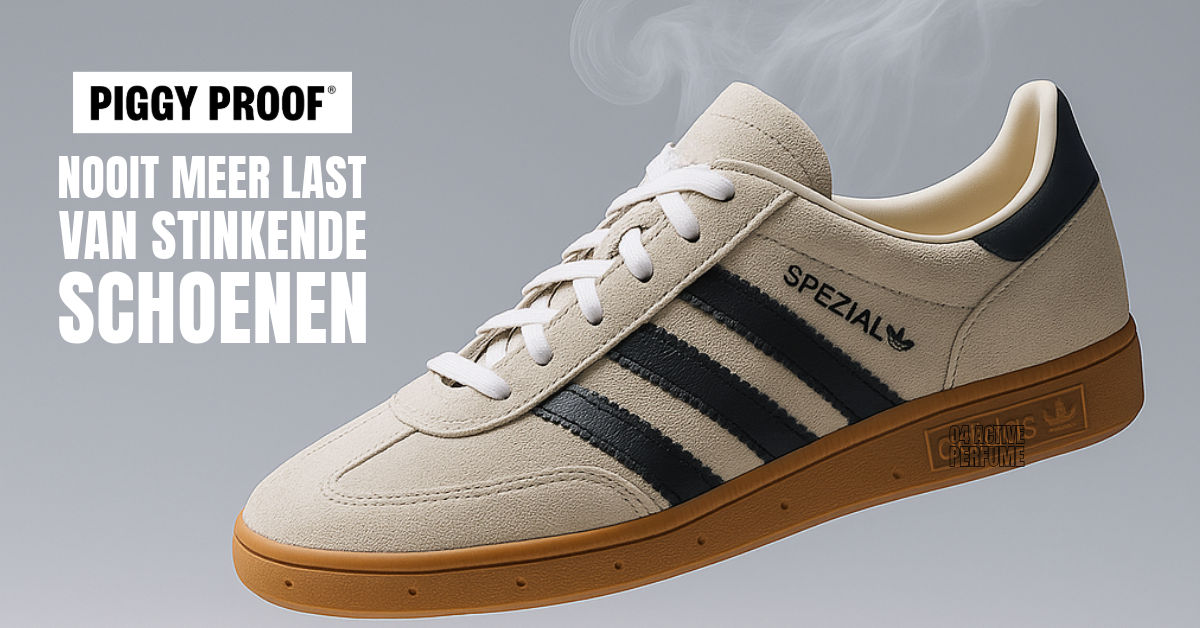
- Neutralize the inside. Hold the spray nozzle inside the shoe and spray 5 to 10 times with Active Perfume 04, and treat both sides of the loose insole. This Eau de Cologne for shoes and textiles does not mask the odor, but neutralizes it, and its antibacterial action inhibits new odor formation. This is the step that does the work, as it's the only way to reach the inside.
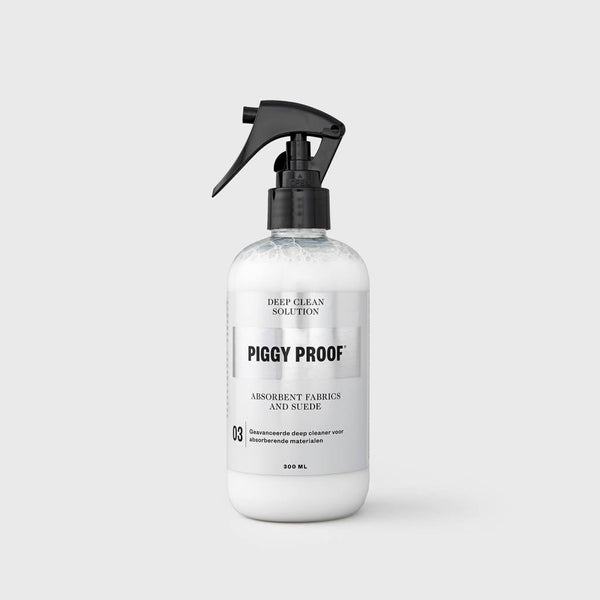
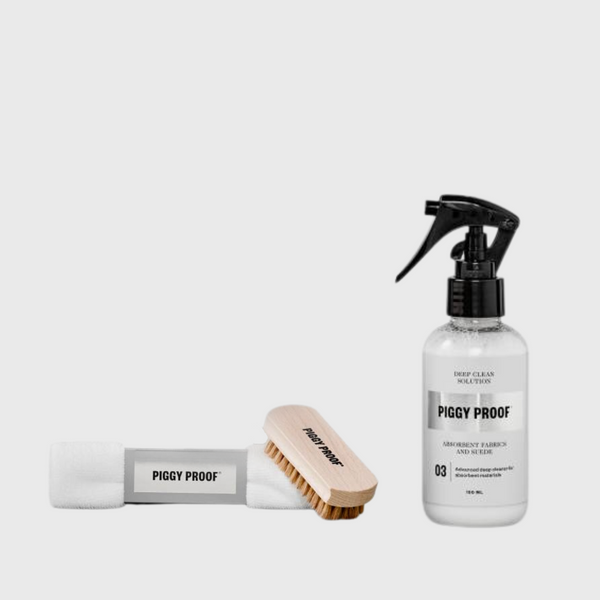
- Is the outside also dirty or musty? Clean it separately. For uppers made of absorbent materials (mesh, canvas, cotton, suede, nubuck, wool), apply Deep Clean Solution 03 to a slightly damp brush and scrub until foam forms. Immediately wipe off the foam with a microfiber cloth instead of letting it soak in. If you have smooth leather shoes, use only the microfiber cloth with lukewarm water. This step is for the outside, not the interior.
- Let dry again for 24 hours. Only replace the insole when both the shoe and the sole are completely dry.
Is the odor still present after one round? This is normal for shoes that have been building up odors for months or years. Repeat spraying for a few days in a row, each time on a dry shoe. If it persists, the insole itself is often saturated. A new insole costs little and solves more than any cleaning.
Per shoe type: what works where
Sneakers and sports shoes
The biggest culprit, because you sweat the most in them and often wear them daily. After exercising, always remove the insole and leave the shoe open. Spray the inside as soon as you smell the first odor, not when it's already really bad. Alternate between two pairs if you exercise regularly; it's the cheapest measure there is. If the outside of mesh, canvas, or suede has also become dirty, clean it separately with the foam cleaner and a brush.
Soccer boots
Soccer boots combine everything that goes wrong: intense sweating, a snug fit, artificial turf, and often a bag where they remain after training. The latter is the real mistake. Take them out of your bag immediately after the match and let them air dry. Spray the inside after every training, because this is precisely where that sharp ammonia odor quickly builds up. Brush off the grass and dirt from the outside when dry.
Shoes that smell after rain
Wet shoes often smell musty rather than sweaty. This is a different problem: it's about moisture evaporating too slowly. Loosely stuff the shoe with newspaper or use shoe trees, change the paper after a few hours, and let the shoe dry at room temperature. Never on the heater, as this will dry out and shrink the leather or textile. Once the shoe is dry and still smells musty, spray the inside.
Slippers and sandals
You almost always wear these barefoot and rarely clean them, a tricky combination. For closed slippers, the same applies as for sneakers: dry and spray the inside. Open models are easier, because the footbed is exposed and you can actually clean it. For Birkenstocks and similar sandals with a suede footbed, this approach is described step-by-step in Do Birkenstocks stink? How to get them fresh again quickly.
Work shoes and safety shoes
Eight to ten hours a day in a shoe with a steel toe cap and little ventilation is asking for trouble. Alternating between two pairs here is not a luxury but almost a necessity. Remove the insole daily and make the odor spray a regular part of your routine instead of an emergency measure.
What doesn't work (or makes it worse)
- The washing machine. For many shoes, the combination of water, heat, and movement damages the glue, sole, and shape. For leather, suede, and shoes with a cork or latex sole, it is simply harmful.
- The freezer. Freezing temporarily inhibits bacteria but does not reliably kill them. As soon as the shoe becomes warm and damp again, the odor returns.
- Baking soda. Absorbs some moisture and dampens the odor for a few days, but does not tackle the bacteria. Moreover, the powder remains in textiles and suede.
- Vinegar. Can affect the color and structure of suede, nubuck, and leather, and you trade one odor for another.
- Deodorant or perfume in the shoe. Only masks. As soon as it evaporates, you'll smell the original again.
- Wringing a foam cleaner into the interior. You can't get to it properly, you can't get the foam out, and a soaked insole won't dry for days. For the inside, spraying is the right method.
How to prevent shoes from smelling
- Alternate between two pairs so that each shoe can dry out for 24 hours.
- After intensive use, remove the insole and let it dry separately.
- Wear cotton or wool socks instead of polyester, and change them daily.
- Do not store shoes in a closed bag, box, or sealed cupboard.
- Use the odor spray preventively, at the first hint of odor instead of only when there's a complaint.
- Replace the insole if it is saturated after a year of intensive use.
If you want to keep your shoes not only fresh but also clean, also read our guides on cleaning suede shoes and cleaning and maintaining leather shoes.
When it's not your shoes
If your shoes continue to smell even though you spray them, alternate them, and let them dry, the cause might be your feet. Excessive sweating (hyperhidrosis), a fungal infection, or a bacterial skin condition can produce an odor that shoe care alone won't solve. If you also notice itching, flaking, discolored nails, or a significantly different odor, consult a doctor or podiatrist. Keeping your shoes fresh helps, but doesn't treat the underlying problem.
Frequently asked questions
Why do my shoes smell?
Bacteria in the insole and lining break down sweat and skin flakes, producing odor-causing substances. Heat, moisture, and insufficient drying time exacerbate this. The odor is in the material, so airing alone usually doesn't solve it.
My shoes smell like cat pee, how is that possible?
That sharp smell is ammonia, which is released when bacteria break down proteins from sweat. It occurs especially with sports and soccer shoes. Let the shoe dry completely, hold the spray nozzle inside the shoe and spray 5 to 10 times with an odor-neutralizing spray. Repeat this for a few days in a row for stubborn cases.
Can I clean the inside of my shoes with a cleaner?
Not effectively with a closed shoe. You can barely reach it with a brush, you can't get the foam out, and a soaked insole won't dry for days. For the inside, use an odor-neutralizing spray. A foam cleaner is intended for the outside.
Can shoes go in the washing machine?
For most shoes, preferably not. Water, heat, and movement damage glue, sole, and fit. For leather, suede, and shoes with a cork or latex sole, it is harmful. Instead, let the shoe dry thoroughly and treat the inside with an odor spray.
Does baking soda help against smelly shoes?
It absorbs some moisture and temporarily dampens the odor, but it doesn't tackle the bacteria. Moreover, the powder remains in textiles and suede. Letting them dry well and then neutralizing works better.
How can I quickly get rid of sweat odor from my shoes?
Remove the insole, let the shoe dry completely, hold the spray nozzle inside the shoe, and spray 5 to 10 times with an odor-neutralizing spray. If the odor returns within a day, repeat spraying for a few days in a row. If it persists, the insole is likely saturated and you should replace it.
How can I prevent sports shoes from smelling?
Take them out of your bag immediately after sports, remove the insole, and let everything air dry. Alternate between two pairs so that each shoe can dry for 24 hours, and use the odor spray preventively instead of waiting until there are complaints.
In short
Shoes smell because bacteria break down sweat and skin flakes in the lining. That odor is inside, and you can't get to it with a brush and foam. Let the shoe dry for 24 hours, remove the insole, and spray Active Perfume 04 into the shoe 5 to 10 times. If the outside is also dirty, clean it separately with the Deep Clean Solution 03. And from now on, alternate between two pairs: it costs nothing and makes the biggest difference.